
Conserving our iconic birds
New Zealand’s iconic endemic birds – found nowhere else on earth – include many critically endangered, endangered, vulnerable and at-risk species. Our ecologists have built scientific expertise over many decades to underpin the more effective conservation of these birds and help to save them from extinction.
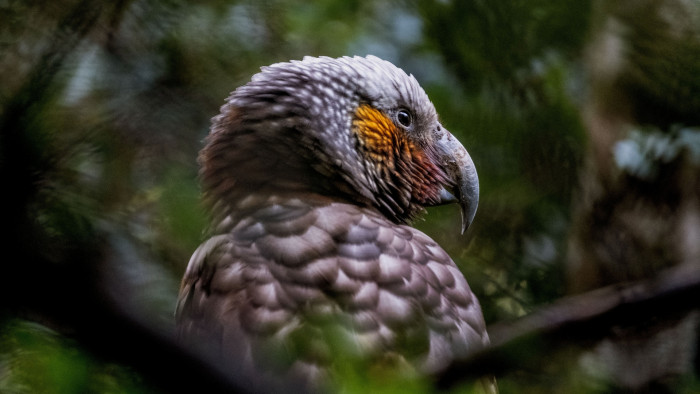
Kākā at Orokonui Ecosanctuary
We have studied the gut microbiomes of kiwi kept in captive breeding programmes, to increase their chicks’ chances of survival. Realising that captive birds don’t forage as widely as in the wild, we have developed probiotic supplements to add to their gut microbiomes to give them a better chance of surviving to breed.
We have tracked migrations of birds including kākā, tōrea (oystercatcher), and miromiro (tomtit) across landscapes using conventional ringing and advanced satellite tag technology, to better understand the fundamentals of how they move between habitats and where they spend different seasons.
Our More Birds in the Bush research programme has unpicked the seasonal dynamics of bird and predator populations in high mountain forests, leading to better targeting of predator control activities based on the condition of forests and bird populations.
Research done between 1991 and 1994 provided the first filmed evidence that ship rats and possums were the key contemporary causes of kōkako decline. Down to their last 330 breeding pairs by 1999, kōkako numbers have since rebounded fivefold in one of New Zealand's most successful conservation stories. Our science led to the development of 'mainland islands' by the Department of Conservation, and subsequently was pivotal for the community-led ecosanctuary movement and the formation of SanctuariesNZ, creating havens for native birds such as the kōkako.