Detecting food fraud
Six times more mānuka honey is sold globally than is produced in New Zealand. The most likely explanation for this is food fraud, with mānuka honey being diluted, substituted or mislabelled. A European Commission investigation published in 2023 found that close to half of all honey imported into the EU was suspected to be fraudulent.
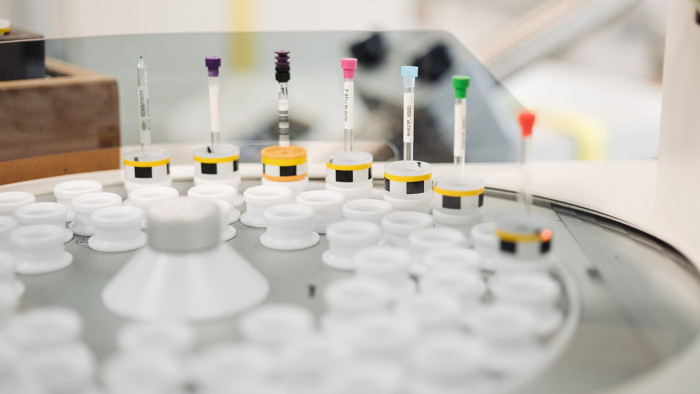
FoodScreener technology can authenticate foods from their chemical footprint
Food fraud is accelerating around the world, and poses a significant threat to New Zealand, targeting many of the premium products we export, including honey, wine, fruit and olive oil.
Globally, enforcement is tightening. It’s likely that in the future, some premium retailers and export markets will demand authenticity verification. When they do, the NMR FoodScreener instrument in Lower Hutt is ready.
The FoodScreener is a specialised food authentication instrument that can read the chemical fingerprint of a honey sample, for example, and match it against a global database of 40,000 authenticated honeys. It can do the same for wine, olive oil, and fruit, using Nuclear Magnetic Resonance (NMR) spectroscopy to assess the ratios between up to 40 compounds. A single FoodScreener test can detect adulteration, dilution, mislabelling and false origin claims, revealing a huge amount of information from the tiny sample.
New Zealand has one of only around 80 FoodScreeners in the world. As food fraud becomes more sophisticated and regulatory scrutiny intensifies, having this capability in New Zealand will help government agencies and food exporters protect our hard-earned reputation as a producer of premium products, and the export value that depends on it.