Improving water safety through innovation
Safe drinking water is fundamental to public health. In New Zealand, tens of thousands of people contract gastroenteritis from contaminated supplies each year, while globally unsafe water contributes to ~1.8 million deaths annually. Protecting communities depends on understanding how pathogens move through and are removed from water systems, and on our ability to track their pathways.
PHF Science advances this work through sustained innovation, developing tools that enable safer, more effective study of waterborne risk, helping protect freshwater quality and drinking-water safety.
Research with dangerous microbes involves health risks; so what if we can find a way to study them without being exposed to live pathogens? To address this, PHF Science has developed biomolecule-modified surrogate particles that mimic the physical and chemical features of key pathogens, such as Cryptosporidium parvum, rotavirus, and Legionella pneumophila. These surrogates simulate the ways pathogens move and persist in water systems, and can be tagged with DNA markers for easy detection. Eliminating the need to handle live pathogens enables safer and more effective research.
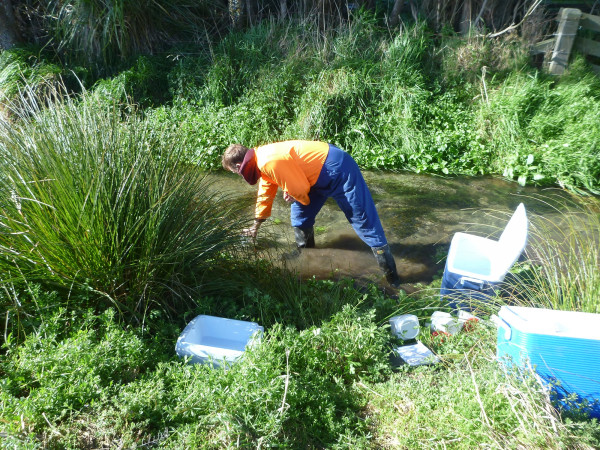
PHF Science has also developed biocompatible, biodegradable artificial DNA tracers, allowing simultaneous tracking of multiple contamination sources and pathways in freshwater systems. This innovation is more versatile than traditional tracing techniques.
Our scientists created the world’s first and only comprehensive database of microbial removal rates in subsurface environments, now widely used to assess groundwater contamination risk, set safe setback distances, and select suitable land-disposal sites. Their recent development of antimicrobial filter media provides a practical, point-of-use solution to protect communities in New Zealand, the Pacific, and beyond.