
Science for healthy honeybees
Aotearoa New Zealand’s honey exports generate around $425 million annually, but honeybees contribute far more to our food system than just the liquid gold they produce. They pollinate a wide range of crops, from our favourite fruits and vegetables to plants eaten by livestock.
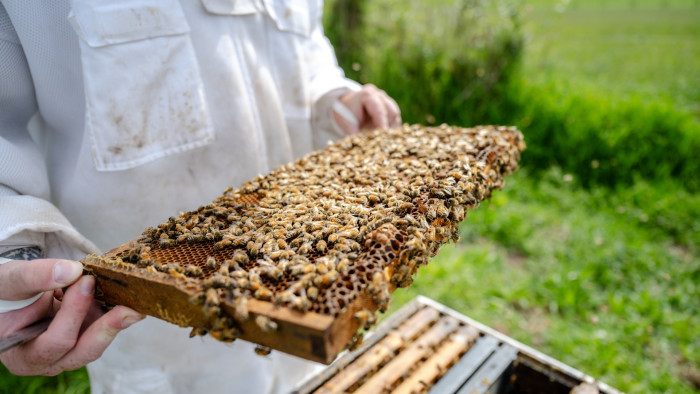
Beekeeper with a hive frame full of honey
Research on honeybees began over 100 years ago in New Zealand. In 1905, the Department of Agriculture established an apiary in Ruakura for beekeeping demonstrations – a site where apicultural research continues today. Scientists have continued to build knowledge about honeybee health, behaviour, and productivity. Research has explored how colonies are structured and organised, while genomic and chemical research has helped establish New Zealand mānuka honey’s unique provenance.
Since 2000 scientists in New Zealand have supported the apiculture industry in its challenging fight against the parasitic mite Varroa destructor, developing tools that help beekeepers better understand and manage mite pressure within their hives and exploring future focused management options. In recent years Australian authorities have drawn on the expertise of apiculture scientists at the Bioeconomy Science Institute for advice on varroa biology, monitoring and management.
Over the past decade, researchers have tracked the health of New Zealand’s hives through the annual New Zealand Colony Loss Survey, collecting data on colony survival across the country. These results help build an understanding of the impact of pests and diseases in hives and allow colony loss rates to be compared with those from more than 40 other countries. Scientists have also developed a national nectar map to support more effective beehive management, providing insights into where the most reliable floral resources are located and when they are available throughout the year.