
Solving winter grazing challenges
As farming intensified across New Zealand in the 1990s, a new challenge emerged: how to keep waterways clean while maintaining productive farms.
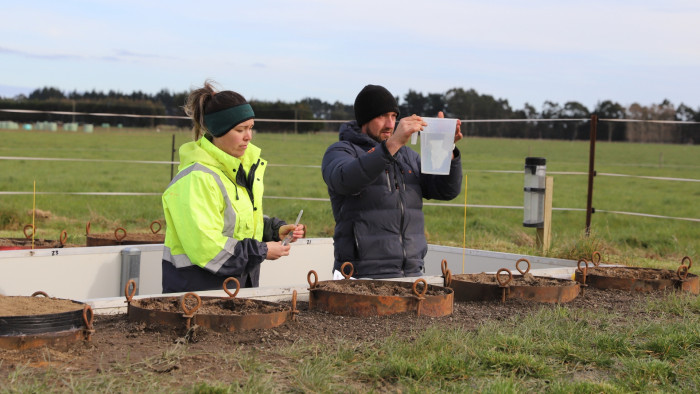
Field trials, modelling and on-farm testing has helped reshape farming practices to safeguard water quality.
At this pivotal moment, scientists stepped in to find practical ways forward, without compromising productivity. Their work centred on developing practical, science‑based solutions that could easily use in their day-to-day operations.
A major breakthrough came from research into nutrient losses associated with winter grazing. Scientists discovered large amounts of nitrogen were left in the soil during colder months, when plants grow slowly and use less nitrogen and the risk of it being washed into waterways is high.
This insight led to the development of catch‑crop systems – fast‑growing crops sown soon after grazing to take up leftover nitrogen before it leaves the paddock.
Extensive field trials, modelling, and on‑farm testing were used to refine crop choices, sowing methods, and timing so they would fit normal farming routines.
The results were compelling: nitrate losses to water were reduced by up to 60 percent, muddy runoff decreased, helping to improve water quality, and farmers continued to produce valuable feed or grain.
By working closely with farmers and advisors to translate research into trusted, practical guidance, scientists helped embed these practices into routine farm management.