
The golden age of kiwifruit
Our unique golden-fleshed kiwifruit are enjoyed by people in more than 50 countries, including those living at Scott Base in Antarctica.
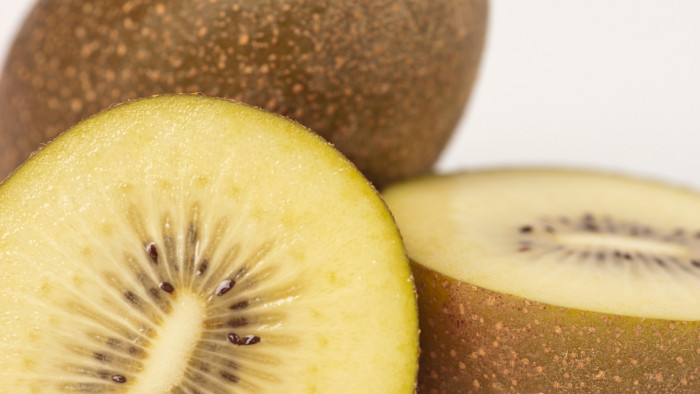
Novel fruit with different flesh colours underpin New Zealand's kiwifruit sector
In 1995, a new variety producing kiwifruit with sweet yellow flesh, known as ‘Hort16A’, was launched from the New Zealand kiwifruit breeding programme. Soon the fruit was being sold around the world as Zespri Gold Kiwifruit, creating a new golden kiwifruit category.
In 2010, a disease found in New Zealand proved fatal to many ‘Hort16A’ vines. The breeding programme, in partnership with Zespri Innovation, had a promising selection found to be tolerant to the disease, known as ‘Zesy002’. This was quickly deployed to affected growers, with the fruit being sold as Zespri SunGold Kiwifruit. The new SunGold fruit has great consumer appeal and good storage life, with the ‘Zesy002’ plant producing high yields and with good disease resistance. Now there are more than 8500 hectares of ‘Zesy002’ planted across the motu with tens of millions of trays of Zespri SunGold Kiwifruit sold globally each season.
The New Zealand kiwifruit industry employs more than 35,000 people throughout the year and contributes more than $3 billion to the New Zealand economy annually. Novel varieties keep New Zealand ahead of the global kiwifruit market with the breeding programme dating back to the 1980s. Zespri SunGold Kiwifruit has become Zespri’s largest value variety. In 2025, Zespri global kiwifruit sales exceeded $5 billion, with 75% of the value coming from Zespri SunGold Kiwifruit and Zespri RubyRed Kiwifruit, a red-fleshed variety released from the breeding programme in 2019.
New varieties are now being bred by scientists at the Kiwifruit Breeding Centre, a joint venture between the Bioeconomy Science Institute and Zespri.