
Tracking the air we breathe
Carbon dioxide (CO₂) is a natural part of the air we breathe. But over recent decades, CO₂ levels in the atmosphere have been rising, largely due to humans burning fossil fuels such as coal, oil and gas. This increasing CO₂ traps heat and, along with other greenhouse gases, is driving climate change.
Tracking how much CO₂ is in the atmosphere and how it changes over time requires careful, long‑term measurement. Just south of Wellington, Baring Head is one of the best places in the Southern Hemisphere to do that work. Strong southerly winds bring clean air from across the Southern Ocean, giving scientists a clear picture of background CO₂ levels.
Measurements at Baring Head began in 1972, when CO₂ levels were about 326 parts per million (ppm) and followed a predictable seasonal cycle. Over time, that cycle remained, but a steady upward trend emerged.
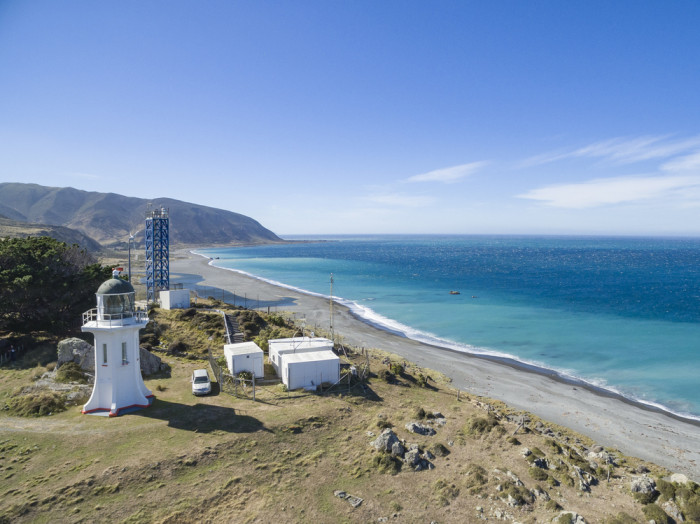
Atmospheric measurements like this at Baring Head, near Wellington, began in 1972 and have shown a steady increase in CO₂ levels. Photo: Earth Sciences NZ
More than fifty years on, CO₂ concentrations measured at Baring Head have risen to around 424 ppm, an increase of about 100 ppm, or almost 30 percent. Levels as low as those seen in the early 1970s have never been recorded again.
The tools used to measure CO₂ have changed, from glass flasks to highly automated instruments. What has not changed is the discipline behind the work. Careful calibration ensures today’s measurements can be directly compared with those made decades ago. As time went on, we added measurements of other greenhouse gases and isotopes. These additional measurements help us understand the sources and sinks responsible for the quantities of each greenhouse gas in the atmosphere.
These data support global climate monitoring and provide clear, local evidence of how the composition of the atmosphere has changed – measurement by measurement and year by year.