
Protection from pests and diseases
New Zealand is a world leader when it comes to biosecurity, providing new knowledge and tools to manage biosecurity risks from prevention to post-border management.
From being one of the first countries to introduce regulations on ships governing biofouling and ballast water, to developing AI detection methods for marine and freshwater pests such as exotic Caulerpa and Lagarosiphon (respectively), New Zealand scientists have always had a keen understanding of the importance of biosecurity to the economy, natural environment and taonga.
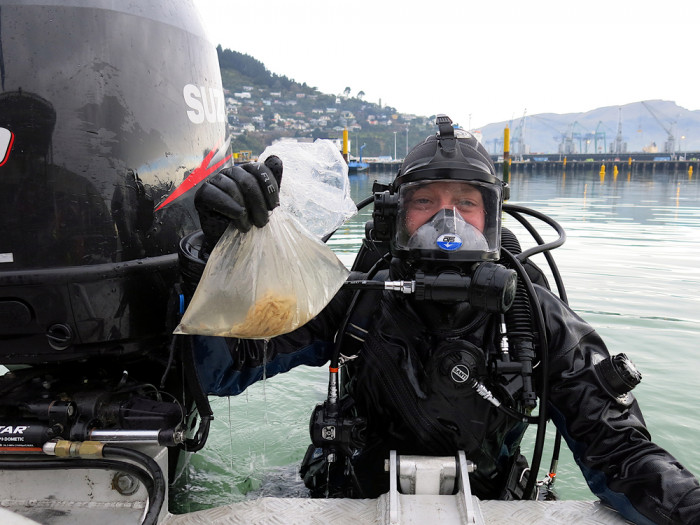
Marine biosecurity surveys like this one in Lyttelton Harbour are crucial for protecting our environment. Photo: Earth Sciences NZ
Work undertaken by marine and freshwater scientists is targeted to protect New Zealand’s marine and freshwaters from pests and diseases, by, responding to or identifying incursions when they occur, and improving understanding and control of established pests and diseases.
The MPI-funded National Marine High-Risk Site Surveillance programme has been conducting surveillance for high-risk non-indigenous marine organisms in ports and harbours for more than 24 years, leading to the early detection of 24 new-to-New Zealand marine species and more than 270 instances of range extensions for already established marine non-indigenous species. Meanwhile the Marine Invasives Taxonomic Service provides taxonomic identification and collection management.
Other biosecurity milestones include science that has contributed to the domestic eradication of six high-risk freshwater weed species.
And more recently response teams have also worked to mitigate the impacts of marine and freshwater invasive pests and diseases such as the lethal oyster parasite Bonamia ostrae, the spread of myrtle rust spores, exotic caulerpa seaweed and the invasive clam Corbicula fluminea.
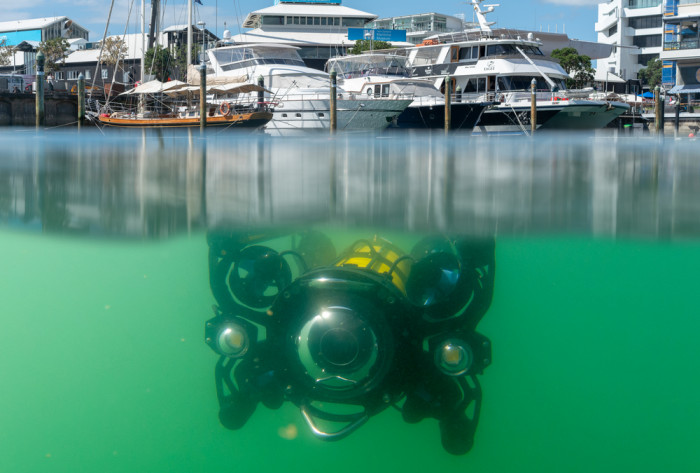
The ROV Boxfish is a lightweight underwater robotic vehicle used for detecting invasive marine species. Photo: Earth Sciences NZ