
New Zealands’s first green hydrogen lab
For decades, hydrogen has been viewed as a potential fuel for the future, but turning that promise into a practical solution has required major advances in science, engineering and safety. In 2024, scientists helped move New Zealand closer to that future by opening the first dedicated laboratory in New Zealand for green hydrogen.
Green hydrogen is produced using renewable electricity to split water into hydrogen and oxygen, creating a fuel with no carbon emissions. However, these systems demand extremely high purity standards, specialised materials and rigorous testing to operate safely and efficiently.
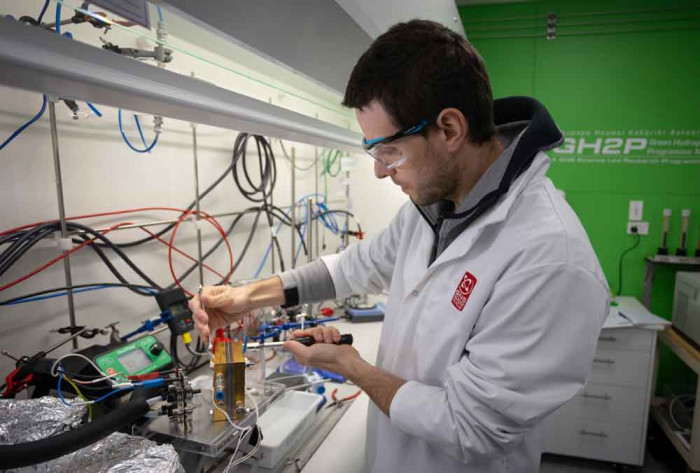
New Zealand’s first dedicated laboratory for green hydrogen enables fast testing of this potential fuel. Photo: Earth Sciences NZ
Until the laboratory was established in Gracefield, Lower Hutt, New Zealand’s hydrogen pioneers were shipping samples offshore for testing, paying high costs and waiting longer. This was slowing national progress. Now, these companies are testing their samples much faster and more cost-effectively, and they are receiving much more in-depth insights about their products.
The same facility is also researching next‑generation technologies and processes for green hydrogen and green ammonia. Simply, this lab is not just about testing, it’s also where ideas from both scientists and the industry are being translated into practical research that is guiding innovation and progress.
The laboratory is also giving the Government scientific confidence in the emerging hydrogen economy by already contributing to building the regulations and standards for New Zealand.
This work is helping position New Zealand within the growing global hydrogen economy, supporting cleaner heavy transport, low-emissions industry and a more secure, sustainable energy system.