Expanding the range of the kākāpō
Kākāpō, found only in Aotearoa New Zealand, are critically endangered, flightless, nocturnal, and the heaviest parrots in the world. Kākāpō quickly disappeared from most of the country after the introduction of predatory mammals. By 1995, they were down to the last 51 individual birds. After intensive efforts to save them from extinction there are now about 250 kākāpō confined to three small, predator-free islands.
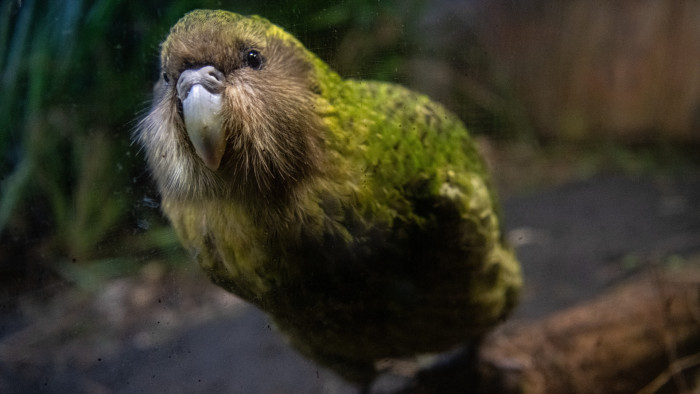
Kakapō
Kākāpō heavily depend on the production of rimu fruit to breed, which only happens every two to five years and which creates problems for kākāpō conservation, especially since rimu don’t grow in all of New Zealand’s forests.
But fortunately for the kākāpō, research has supported the expansion of the potential sites for their future population recovery. Scientists are using microscopy and ancient DNA analysis of samples including lake, bog, swamp and cave sediments, and preserved droppings (coprolites) of extinct birds and introduced animals to reconstruct past ecosystems, enabling better management of present-day environments.
Analyses of ancient DNA and pollen in preserved kākāpō coprolites revealed that the birds were historically eating almost twice the range of plants they do now, including seeds and leaves of southern beech, and nutrient-rich beech mistletoes, and therefore their habitat was also much wider than it is today. This research has provided valuable historical context for the Department of Conservation, providing confidence in the potential of beech forest sites for the future management of kākāpō. This represents a considerable increase in possible suitable locations for the kākāpō if these environments can be made predator-free.

Paleoecologist Dr Kieren Mitchell in our Long-Term Ecology Lab, where the ecology of past environments is reconstructed to inform present day conservation