
The flax of the matter
In the early 1960s, Rene Orchiston began collecting harakeke, recognising its remarkable diversity and its importance to her Māori friends. What started as a personal commitment to safeguarding Phormium became a nationally significant legacy. In 1987, her living collection was gifted and formed the foundation of what is now Te Kohinga Harakeke o Aotearoa – National New Zealand Flax Collection.
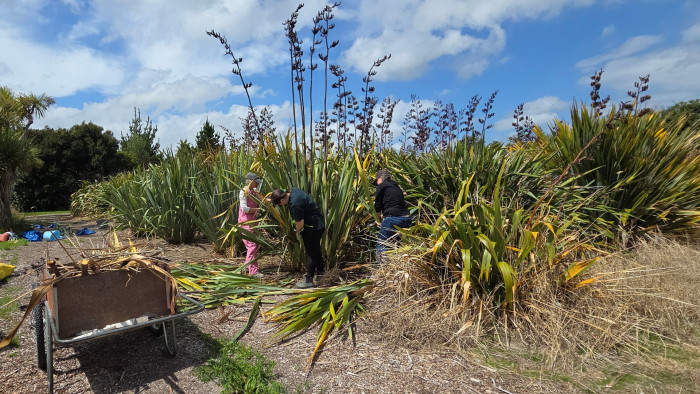
Tāhuna Toi weaving group (Mountain Māori) students from Queenstown harvesting harakeke leaves from the Manawatū fibre cultivars at Te Kohinga Harakeke o Aotearoa.
From this foundation, more than 600 pā harakeke have been established throughout Aotearoa using plants from the Orchiston Collection. These living plantings have strengthened cultural practice, supported community resilience, and provided material for research and innovation. They have contributed to projects such as water filtration research led by the University of Canterbury and fibre-focused initiatives with KiwiFibre.
Scientists are also investigating the molecular composition of plants to trace their whakapapa and understand how fibre traits are inherited across generations. In parallel, a project led by Bioeconomy Science Institute Maiangi Taiao Māori researchers is exploring the unique bioactive compounds present throughout the plant, revealing new insights into its potential applications and cultural significance.
Today, as one of the Bioeconomy Science Institute Maiangi Taiao’s treasured taonga, Te Kohinga Harakeke o Aotearoa embodies intergenerational stewardship, partnership, and a living commitment to the wellbeing of land and people.
Te Kohinga Harakeke o Aotearoa – National New Zealand Flax Collection