
Superconductors in space
In the 1980s, scientists began working with a class of materials that conduct electricity with zero resistance — superconductors. What began in DSIR and later evolved through Industrial Research Ltd and Callaghan Innovation now lives on as the Paihau–Robinson Research Institute.
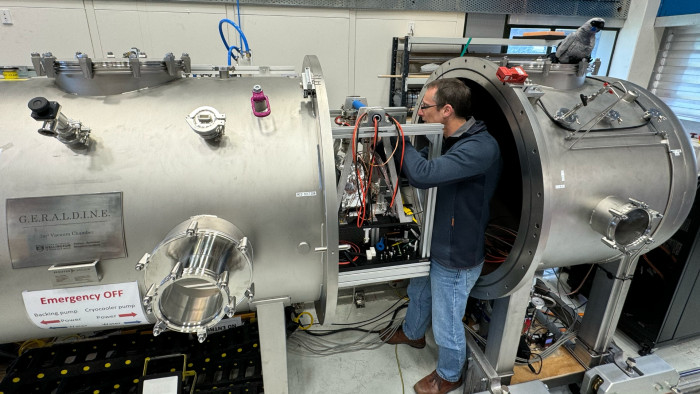
The Space Lab at the Robinson Research Institute (credit VUW Image Services)
The applications read like science fiction, except they're real. Superconducting wire developed in New Zealand has been wound into magnets for more compact, affordable MRI (magnetic resonance imaging) and brain-imaging systems, bringing medical imaging technology closer to clinical precision. The same principles have been applied to high-temperature superconducting motors, light and powerful enough for electric aircraft - a step towards decarbonising aviation. Magnetic levitation systems built on this work pave the way for frictionless rotating machinery and, in the future, maglev-style transport systems.
The research now reaches beyond the atmosphere. Scientists are developing space-grade superconducting systems, including satellite thrusters, as part of New Zealand's growing space sector.