Eradicating insect pests at first sight
When a pest or pathogen breaches the border, New Zealand’s response is guided by world‑leading science. For decades, our scientists have been at the forefront of this work, providing the evidence and expertise that underpin effective biosecurity action.
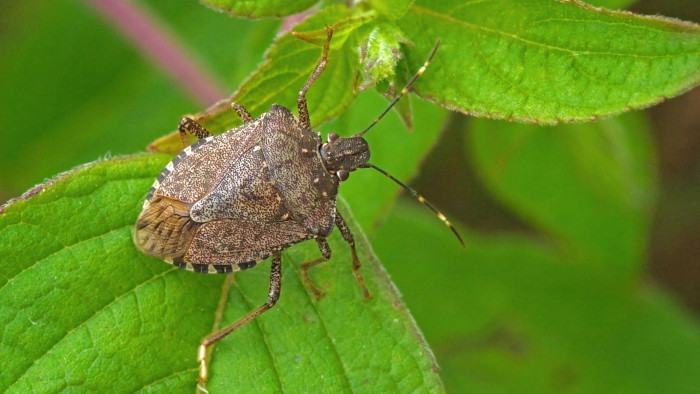
Brown marmorated stink bug
While some responses are highly visible, much of the effort happens behind the scenes. Surveillance ramps up, traps are checked and scientists work quickly to determine whether a detection is contained or signals a wider incursion. New Zealand scientists work closely with MPI and its wider biosecurity network to help detect new threats early and stop them before they can establish – protecting the country’s horticulture, forestry and farming sectors.
This science‑led approach has delivered significant results. New Zealand has successfully eradicated insect pests, supported by a purpose‑built containment facility established in 1999 for urban eradication responses. The facility enables scientists to safely study high‑risk pests, establish laboratory colonies, understand pest biology and test potential control tools. It has contributed directly to nationally and internationally significant successes, including the world‑first eradication of the great white butterfly in 2016. That achievement is estimated to avoid long‑term control costs of $43–$133 million annually.
Some responses are etched into public memory, such as aerial spraying programmes targeting the painted apple moth in the early 2000s across West Auckland. Science-informed surveillance networks mean a single insect, such as an Oriental fruit fly, can be detected swiftly, activating an immediate response and seeing neighbourhoods locked down so rogue insects can’t hitch a ride further afield on fruits and vegetables.
From rapid response to long-term preparedness, science remains central to helping New Zealand stay one step ahead of any future incursions.