
Taking the sting out of wood wasps
Since the early 1960s, science has played a key role in protecting New Zealand’s forests from pests and pathogens, ensuring they remain healthy and productive. This work has led to the development of early warning systems to improve surveillance and disease forecasting and has helped forest owners build evidence‑based control strategies.
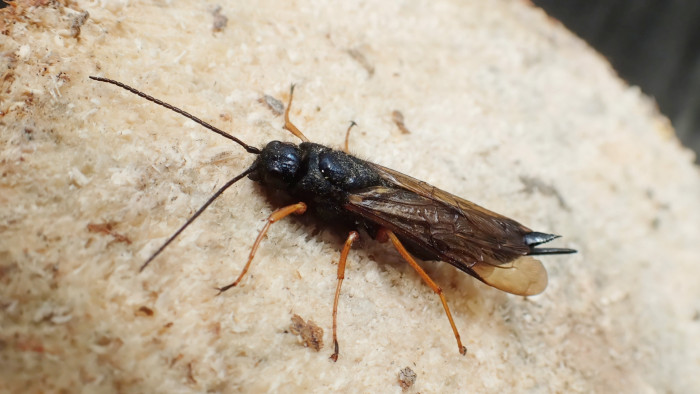
Learnings from woodwasp control efforts helped develop a science‑led biosecurity model
It all started when Sirex wood wasp arrived in New Zealand early in the 20th century. This species thrived in existing radiata pine plantations and had no natural predators. By the late 1940s and 1950s, outbreaks were devastating forests in the central North Island, killing tens of thousands of trees and threatening our emerging plantation industry.
Research into the wasp’s life cycle and forest ecology led to a world‑leading biological control breakthrough: the discovery and deployment of the parasitic nematode Deladenus siricidicola, which infects and sterilises the wasp’s larvae. Within a decade of its large‑scale release in the 1960s, Sirex wood wasp was brought under effective control. This nematode, in combination with natural enemy parasitoids from overseas, transformed forest protection in New Zealand and internationally.
Lessons learned from this response led to the development of a science‑led biosecurity model that continues to help New Zealand prepare for other high-risk threats. We’ve built world‑class insect and fungal collections to enhance diagnostics and assess emerging bark beetle risks before they establish. And we’ve developed practical tools for managing red needle cast and dothistroma needle blight — diseases that can significantly reduce tree growth if left unchecked.
Long-term research, including genetic resistance anddisease modelling, is also future‑proofing forests as warmer, wetter conditions increase pressure from pests and pathogens.