
Landscape-scale control of possums
Introduced in the mid 1800s by settlers looking to start a trade in possum fur, the Australian common brushtail possum (Trichosurus vulpecula) faced no natural predators and quickly got out of control: by the mid-1980s it was estimated there were 60-70 million of them in New Zealand. They cause defoliation and die-back of native forests, and impact native bird populations by preying on birds and their eggs. Possums are also the main wildlife vector of bovine tuberculosis (TB), which has had a significant impact on New Zealand’s beef and dairy industries.
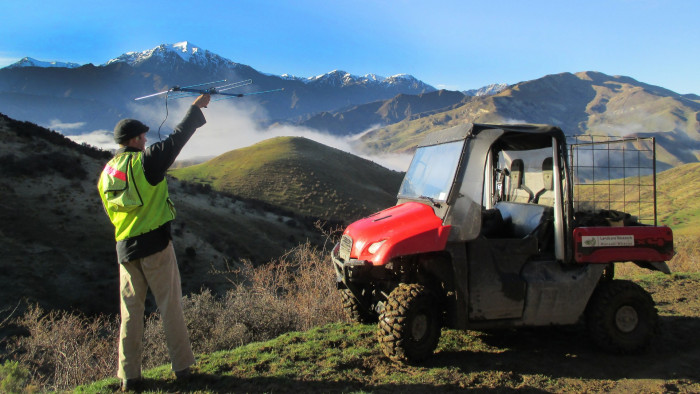
Radio-tracking wild possums fitted with GPS collars in North Canterbury, to better-understand how they spread TB.
Since the 1970s scientists have been working on the possum problem including developing and testing baits, toxins, and traps. They have also focused on improving the cost-effectiveness of control operations while reducing the amounts of toxins used, reducing the unintended impacts of control operations on native bird species, and improving the animal welfare impacts of control methods. Research on improving palatability of baits and effectiveness of lures lead to the recent biscuit-taking discovery that possums find traps primed with cinnamon-flavoured cookies fatally attractive.
Recent advances in genetic methods have enabled genotyping of possums across landscapes allowing researchers to determine how far they range, and how possum populations interact and spread TB.
Possum numbers have been reduced by around 50% since their peak, and are close to zero in some places. Keeping possums at low levels for long periods has been a key strategy in eliminating TB from millions of hectares to date. These advances in possum control, combined with advances in possum surveillance, have enabled New Zealand to meet international TB freedom standards for livestock, and on track to achieve eradication of TB.
Wildlife ecologists are also working on science to support better landscape-scale control of other invasive vertebrates such as rats, mice, stoats, hedgehogs, wallabies, feral cats, deer, goats, pigs, tahr, and rabbits
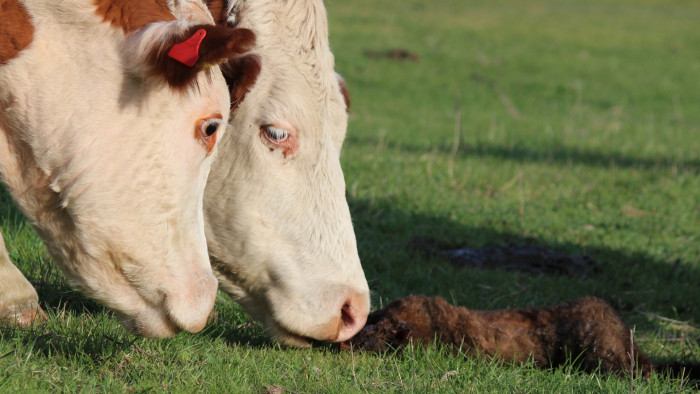
A fatal curiosity; how TB could spread from an infected possum (with pus on its fur) to cattle